
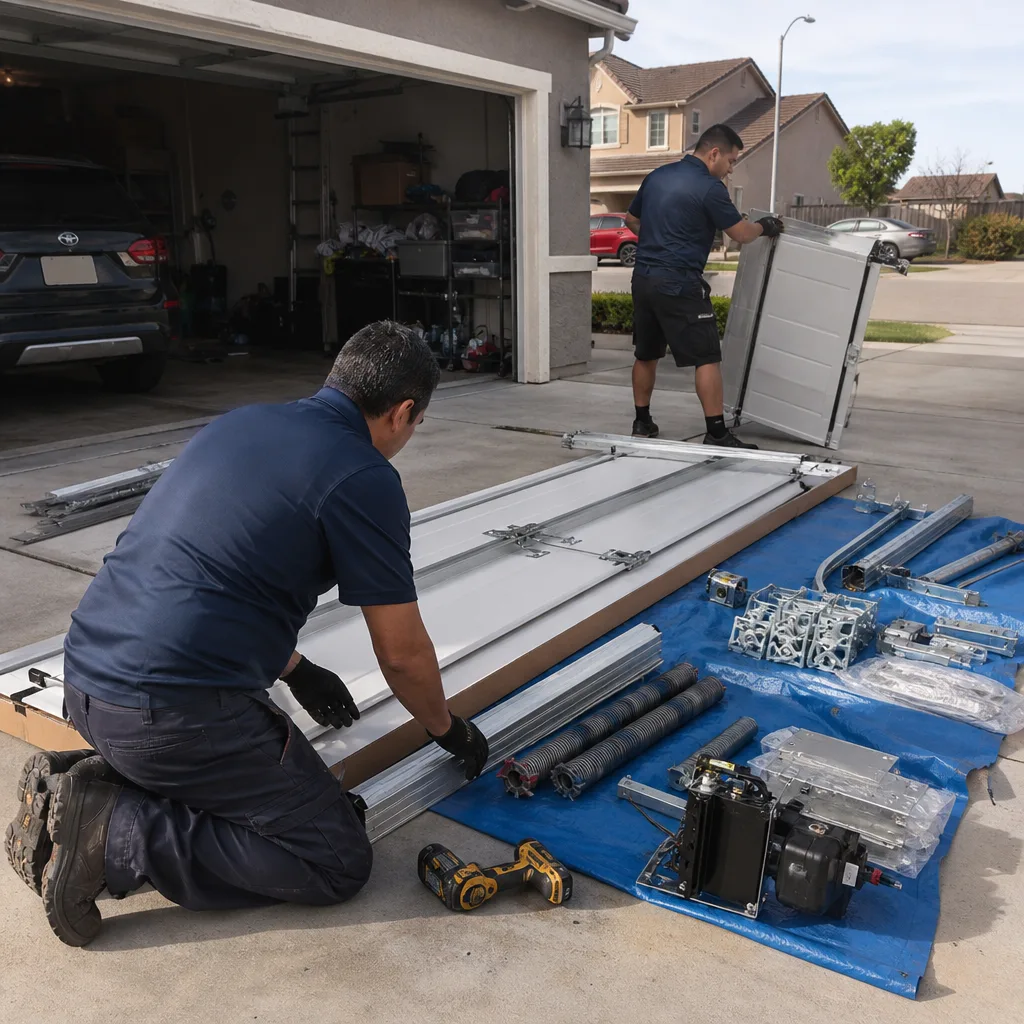
Last updated November 15, 2026
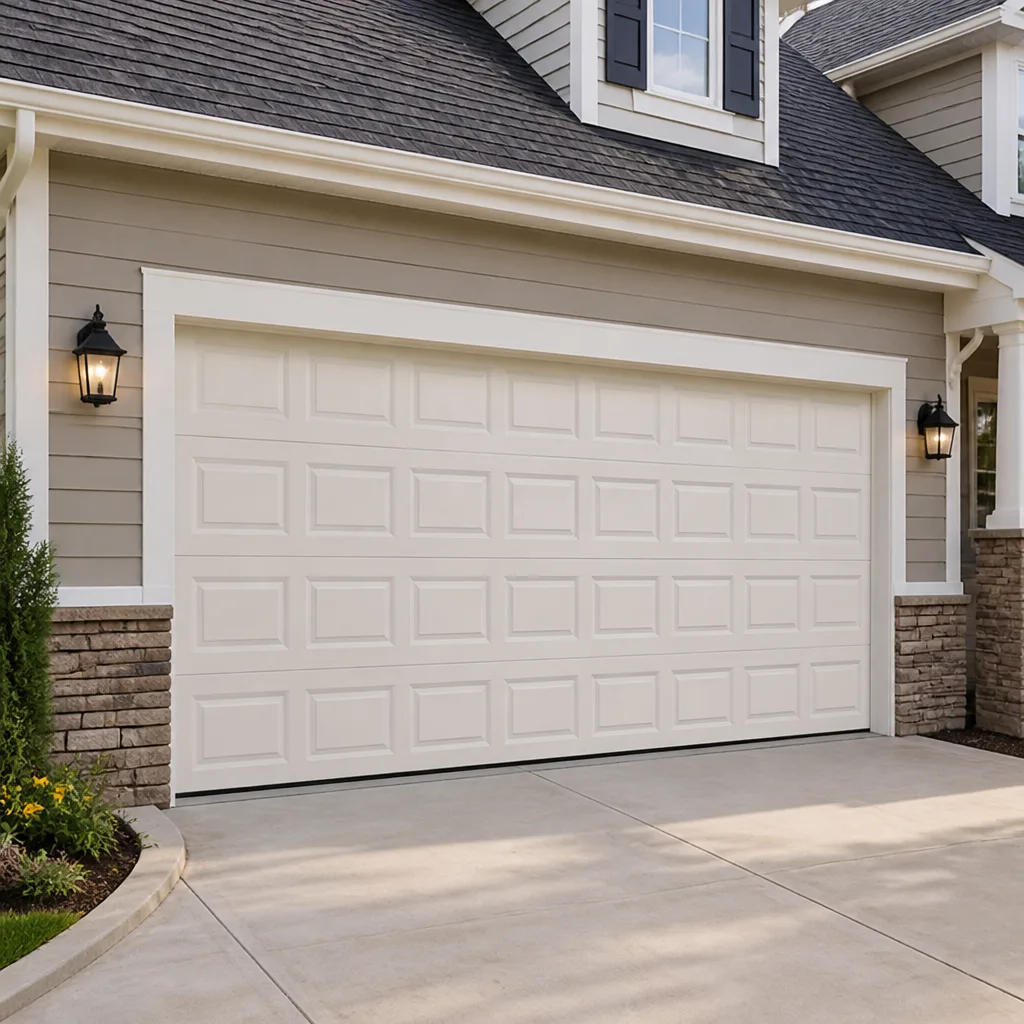 Raised-panel steel
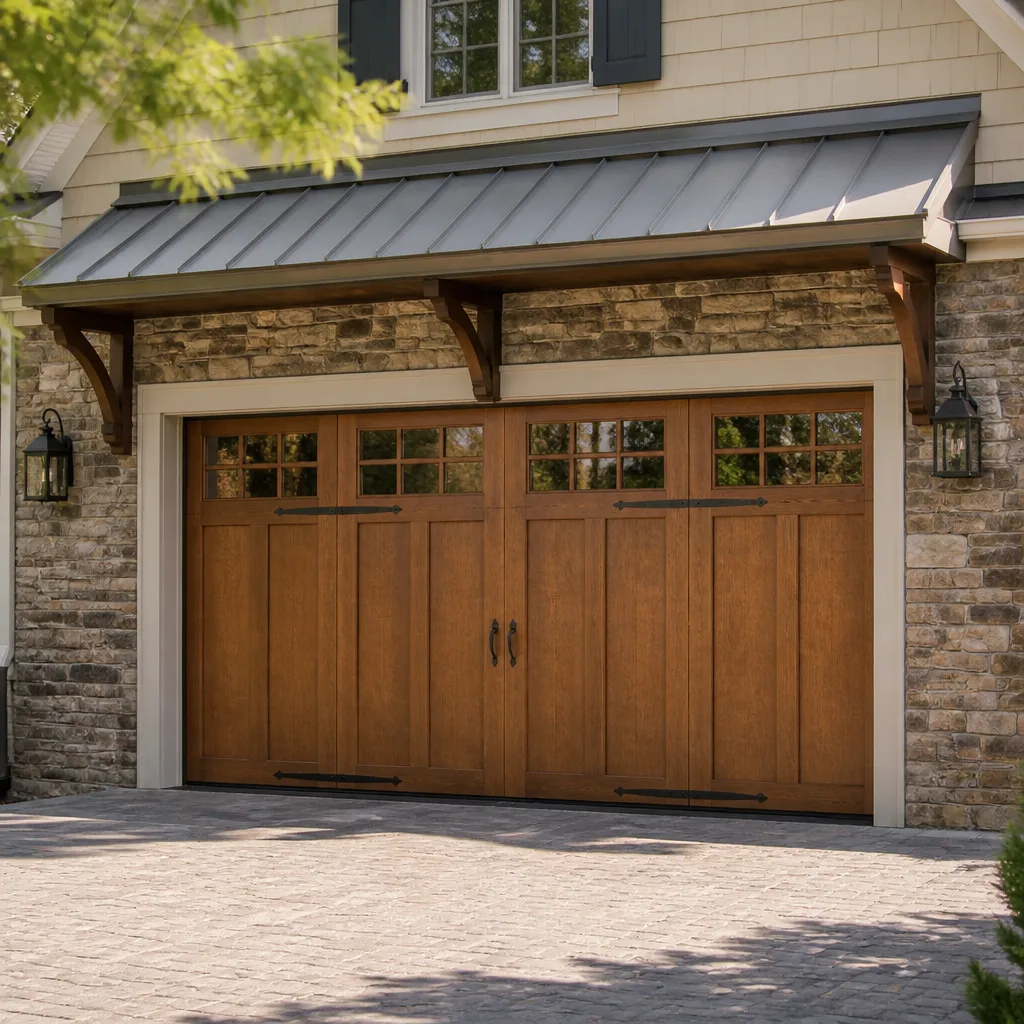 Carriage house
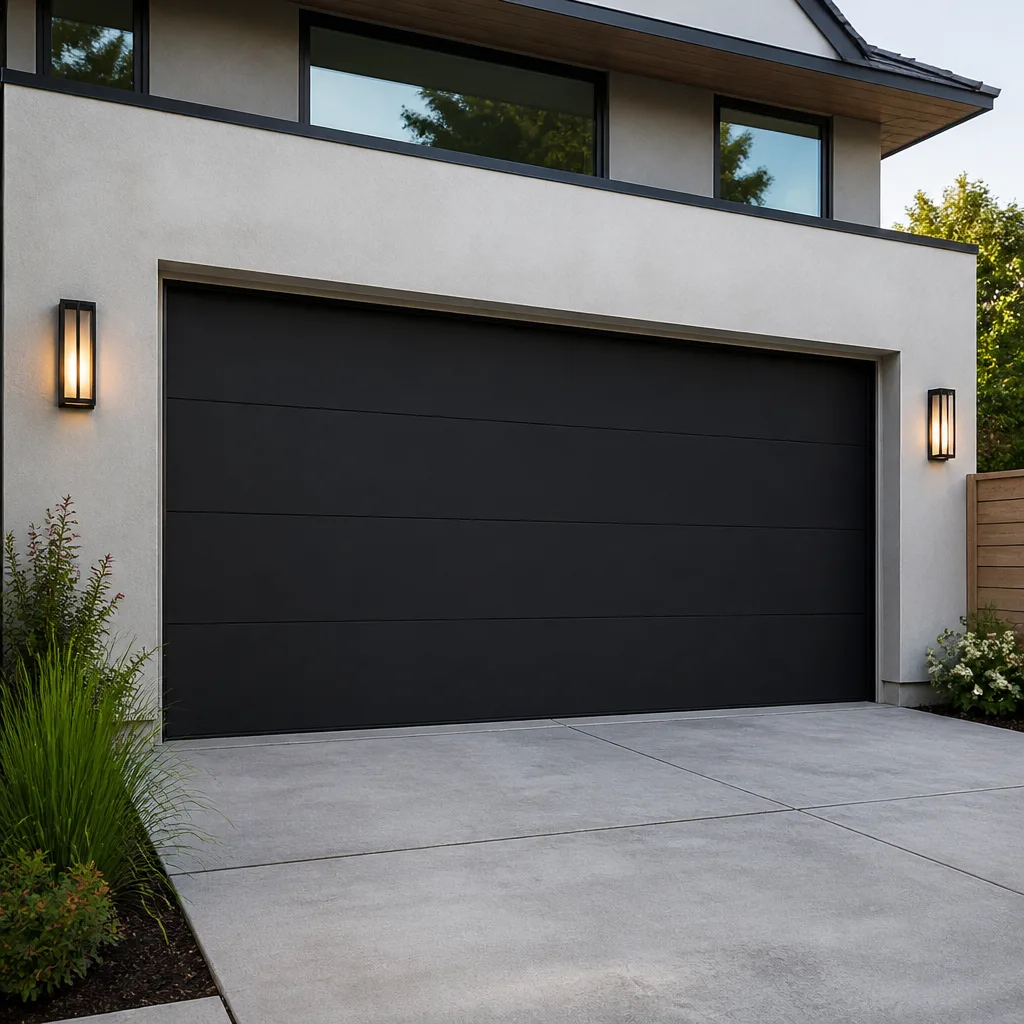 Modern flush
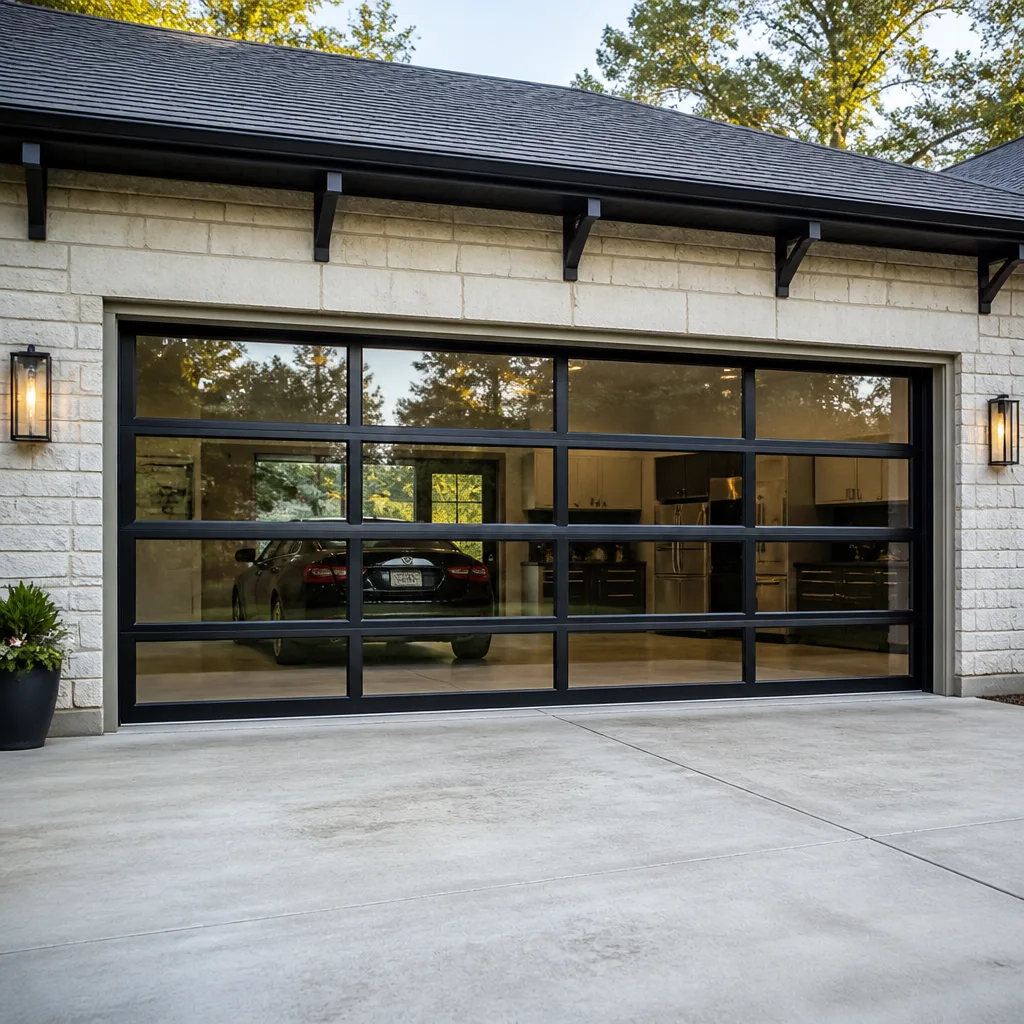 Full-view glass
 LiftMaster openers
 Chamberlain openers
Full 25-point door and opener safety check with every visit - springs, cables, rollers, tracks, and your LiftMaster or Chamberlain opener included
You get a price before we start. It does not change when the pro arrives.
Get your free estimateHow to Hire a Garage Door Contractor in Stockton: A Step-by-Step Guide
Hiring a garage door contractor in Stockton is harder than it should be, and the reason surprises most homeowners: California doesn’t require a specialty license for garage door work. That means the person who shows up to touch your 400-pound door and the high-tension springs holding it overhead may be operating under a general limited specialty classification, or under nothing you can verify at all. In a market this size, word of mouth fills some of that gap, but not enough. This guide gives you a concrete hiring process, question by question, so you can tell a genuine multi-brand technician from a sales-first operation before anyone puts a tool to your door.
Quick Answer
To hire a garage door contractor in Stockton, verify the company’s license and insurance through the California State License Board, ask five specific interview questions about brands, repair-versus-replace philosophy, and warranty terms, and insist on a written itemized quote before work begins. A good contractor will diagnose your existing system, explain the repair options first, and never pressure you toward replacement on the first visit. If a company can’t answer basic questions about your door and opener setup, keep calling.
Styles & brands we work with
- Raised-panel steel
- Carriage house
- Modern flush
- Full-view glass
- LiftMaster openers
- Chamberlain openers
Table of Contents
- What License Does a Garage Door Contractor Need in California?
- How Do You Verify a Contractor in Under Two Minutes?
- The Five Interview Questions That Separate Specialists from Salespeople
- Red Flags Specific to Stockton’s Garage Door Market
- How to Read a Garage Door Quote Line by Line
- Repair vs. Replace: How to Tell What You’re Being Sold
- What You Should Know About Springs Before Anyone Touches Them
- The Final Hiring Checklist Before You Sign Anything
What License Does a Garage Door Contractor Need in California?
In California, garage door installation and repair work generally falls under the C-61 Limited Specialty classification, which covers a long list of narrowly defined trades rather than one specific “garage door” license. Some contractors operate under a general building license instead. The important point is that California does not have a dedicated garage door specialty license the way it has for electrical or plumbing work, which means the state sets a lower bar than most homeowners assume. Verification has to be your job.
The practical result is that anyone with a contractor’s bond and a clean enough record can legally advertise garage door services in Stockton. What the license does tell you is whether the business has met the state’s basic requirements for a contractor: a bond, a defined business entity, and a track record that the CSLB can check. What it doesn’t tell you is whether the technician in your driveway has ever replaced a torsion spring before.
That gap is exactly why you need to go further than the license lookup. Ask specifically:
- Which license classification the company holds, and whether it’s active.
- Whether the company carries general liability insurance and workers’ compensation coverage.
- Whether the technician arriving is an employee or a subcontractor.
- Which brands and systems the company’s technicians regularly work on.
Stockton homeowners should also understand that an unlicensed operator has limited recourse if a repair goes wrong. Without a verifiable license, you have no clear path through the CSLB’s complaint process, and your homeowner’s insurance may take a dim view of work done by an unlicensed contractor. That’s a risk worth avoiding before anyone touches your garage door.
How Do You Verify a Contractor in Under Two Minutes?
You can verify a garage door contractor’s license status through the CSLB website in under two minutes. The lookup is free, public, and doesn’t require an account. Do it before the technician is scheduled, not after.
- Go to the CSLB license lookup page. It’s the official California State License Board site, not a third-party directory. Ignore any site that wants a fee to “verify” a license.
- Search by license number or business name. The closest match should be the exact company name on the truck and the quote. If the name differs slightly, ask why.
- Check the status. The record should clearly show an active license. “Expired,” “suspended,” and “canceled” all mean stop.
- Read the classification and expiration date. A garage door contractor should typically carry a C-61 Limited Specialty classification or a general building license. Confirm the expiration is in the future.
- Check for disciplinary actions or complaints. The CSLB record shows prior actions. One old note isn’t disqualifying; a pattern of complaints is.
- Confirm workers’ compensation coverage. The record will indicate whether the company has coverage or is legally exempt. If not exempt and no coverage shown, ask why.
Do this lookup while you’re on the phone with the company. “We’re licensed and insured” is what every contractor says. A CSLB record is what actually answers the question. Any legitimate Stockton garage door company will expect you to check and will have no problem waiting while you do it.
The Five Interview Questions That Separate Specialists from Salespeople
The interview questions below are the ones that separate a genuine, multi-brand garage door specialist from a company whose real business is selling new doors. Ask them by phone before anyone comes out. Listen less to whether they answer, and more to how.
1. “Which brands do your technicians work on regularly?”
A specialist names specific brands and explains how they differ in the field. If your opener is a LiftMaster or a Chamberlain, they’ll tell you those two share a lot of electronics and the diagnostic process is similar. If your door is a Raynor or a Craftsman, they’ll note that parts and configuration vary by model year. A generalist says “we work on everything” without specifics. A sales-first operation steers toward the brand they want to install.
2. “Do you service both the door and the opener?”
Many companies handle one or the other. If your opener is the problem but they only do doors, you’ll need a second call to someone else. A full-system contractor can diagnose whether the issue is the opener’s logic board or a door binding against the track, because those look similar to a homeowner but require very different repairs.
3. “What’s your approach when a door is off-track or noisy?”
Good answer: they diagnose first, check alignment, rollers, hinges, and spring tension, then give you a repair option before suggesting a replacement. Concerning answer: they jump straight to “you probably need a whole new door.” In our experience, most off-track and noise complaints are repairable, and a technician who skips the diagnosis is a technician who skipped the work.
4. “If I need a repair, will you tell me when replacement makes more sense?”
You want honesty in both directions. A good contractor will say replacement makes sense when structural damage, repeated panel failures, or parts that are no longer manufactured leave repair as a temporary fix. What you don’t want is a company that always recommends replacement, or always recommends repair with escalating costs. Repair-first, with a clear line on when repair stops making sense, is the right posture.
5. “What does your warranty cover, and who stands behind it?”
A specific answer names what’s covered (the spring, the opener motor, the labor) and for how long. A vague answer like “lifetime warranty” without any way to verify the company will still exist next year is worth about as much as the paper it’s printed on. Ask who honors the warranty and how a claim is filed.
Red Flags Specific to Stockton’s Garage Door Market
Stockton has the same garage door problems as every California valley city, plus a market dynamic that comes with a lot of older housing stock and high homeowner turnover. That combination creates predictable patterns worth knowing.
Door-to-door solicitation with an “inspection” offer
A stranger knocking to say they “happened to be in the neighborhood” and noticed your door “looks unsafe” is a common opening move. Sometimes the concern is real, because a broken spring really is unsafe. More often it’s a script. If someone shows up uninvited, take their card, thank them, and do your own verification before booking anything.
Bait-and-switch pricing on springs
Springs are the most common garage door failure and the most commonly misquoted repair. A low ballpark number on the phone that grows on-site is the pattern to watch for. Ask two questions: is the quote for one spring or a matched pair, and what’s the all-in price including labor? A matched pair usually needs replacing together, so a single-spring price and a pair price should be materially different.
“Lifetime warranty” without a verifiable company
A lifetime warranty is only as good as the company honoring it. When a warranty offer sounds unusually strong, verify the business on the CSLB site and check that the company’s structure and history support a claim in three or five years. If you can’t confirm the company will be around, discount the warranty accordingly.
Pressure to replace instead of repair
If a technician arrives and within ten minutes recommends a full replacement without a diagnosis, treat it as a sales call rather than a service call. For more on the repair side, our garage door repair service page walks through the common failure points that get diagnosed before replacement comes up.
No written estimate before work starts
An honest contractor quotes before they start, in writing, and the quote sets the price. A verbal number from the driveway is not a quote. If a company resists giving you a written estimate before starting, that’s your signal to move on.
No clear sign of insurance
If a company can’t provide a certificate of insurance or proof of workers’ compensation coverage, the risk of an injury on your property shifts to you. Ask, and expect a real document, not just the word “insured.”
How to Read a Garage Door Quote Line by Line
A good garage door quote is itemized enough that you can see exactly what’s being done, what parts are being used, and what the total will be before anyone starts. A vague quote that says “repair garage door – $XXX” tells you nothing.
Here’s what a strong estimate includes:
- Part names and quantities. “2 torsion springs, matched pair” or “1 belt drive opener motor” is specific. “Springs” alone is not.
- Part brands or manufacturer. Even if the brand is generic aftermarket, the quote should say so.
- Labor as a separate line or as a clearly described all-in price. Either is fine, as long as you can tell what’s labor and what’s parts.
- Any disposal or haul-away charge for the old door or opener.
- The scope of diagnostic work already performed. If the tech checked all rollers and hinges before quoting one, that should be reflected.
- A stated total that matches the sum of the items. Do the math before you sign.
Signals of a padded bill:
- Line items like “adjustments,” “tune-up,” or “misc” without detail.
- Charges for parts you can’t identify or verify.
- Labor priced as a percentage of the parts cost – that usually means the actual labor is being masked.
- Pressuring you to add unrelated services to the quote (“while we’re here, we should also…”) without explaining why.
The key line to confirm: the written quote is the price. If the technician discovers something they couldn’t see on the initial diagnosis, they should stop, explain, and get your approval for any change before continuing. A quote that changes after work begins, without that conversation, is a problem.
Repair vs. Replace: How to Tell What You’re Being Sold
The clearest test of any garage door contractor is whether they profit more from repairing your current system or from replacing it. Most companies do both, and the honest ones will say so. The question is whether their recommendation matches what a neutral technician would say.
Cases where repair is usually the right call:
- Broken spring, cable, or roller – these are parts replacements, not a new door.
- Opener stops responding, reverses for no reason, or has a failing motor – usually a logic board, sensor, or motor swap.
- Noisy operation from worn hinges, dry rollers, or misaligned tracks.
- Door sags in one corner – typically a cable or hinge issue.
- Remote or keypad failure – often a battery, programming, or receiver problem.
Cases where replacement genuinely makes sense:
- Structural damage to the door panels or frame that can’t be repaired cleanly.
- Repeated failures on a door whose parts are no longer available.
- An opener that’s obsolete, unsafe, or lacks modern safety sensors and you want a current system.
- A door that’s so far out of alignment the repair costs approach replacement.
- You actually want a different door style and the current one is at end of life anyway.
Here’s how to tell which company you’re talking to: ask the technician what they’d do if it were their own home, then listen for a specific explanation. Someone who says “the springs and one hinge, that’s it, and you’ll get several more years out of this door” is diagnosing. Someone who says “by the time you fix all this, you’re halfway to a new door” is selling. The math may or may not support that statement, but a real specialist will show you the math.
What You Should Know About Springs Before Anyone Touches Them
Garage door springs store an enormous amount of energy – the torsion spring on a standard residential door is often under enough tension to seriously injure someone who tries to adjust or remove it without the correct tools and procedure. This is the one part of garage door work most homeowners should never attempt themselves, and it’s the one part where a bad contractor can cause real harm.
Before a technician touches the springs, ask:
- Will both springs be replaced if they’re a matched pair, and why or why not?
- What’s the expected life of the replacement springs? (Cycle life is the honest measure, not “lifetime.”)
- Does the door get a balance test and safety check after the spring is replaced?
If the answer is “just one spring for now” on a matched pair, ask what that means for the door’s balance and whether the second spring is likely to fail soon after. A specialist will answer that straightforwardly. A sales-first operation will tell you whatever justifies the quote on the page.
The other safety check to insist on: the door should be tested for reversal, balance, and sensor operation after any spring, cable, or opener work. A door that springs back to life but fails a safety check is worse than one that’s clearly broken, because you’ll trust it. If you notice a broken spring and no one is coming for a day or two, keep the door fully closed and don’t try to open it manually. Call us at (877) 405-9570 and we’ll get a technician out.
The Final Hiring Checklist Before You Sign Anything
Here’s the condensed version of everything above, in the order to work through it:
- Verify on the CSLB site. Name, license number, classification, expiration, workers’ comp status.
- Confirm insurance. Ask for the certificate of insurance and confirm the coverage is current.
- Ask the five interview questions. Listen for specifics, brand names, and repair-first language.
- Get a written itemized quote. Part names, quantities, labor, total. No vague line items.
- Confirm the quote is the price. Any change requires your approval before work continues.
- Ask what warranty applies to the parts and labor, in writing.
- Ask for the final safety check. Balance, reversal, sensors, and full operation verification.
Do this process once, and you’ll end up with a technician who treats your existing system honestly. Do it every time, and you’ll rarely get surprised. If your door is giving you grief right now and you need a Stockton technician who actually knows your brand, whether that’s a LiftMaster opener or a Chamberlain, we’re ready to take the call.
Common Mistakes to Avoid
- Hiring on price alone. The cheapest quote on the phone is often the number that grows the most on-site. Ask for a written quote from two or three companies and compare line by line, not just totals.
- Skipping the CSLB check because “they seemed nice.” A pleasant phone manner says nothing about licensing or insurance. Two minutes on the CSLB site is worth more than any number of five-star stickers.
- Accepting a single-spring quote as if it were a pair. A matched pair usually needs replacing together. Ask explicitly which you’re getting, and expect the pair price to reflect both springs.
- Trusting a lifetime warranty without verifying the company. A warranty is only worth the business behind it. If you can’t confirm the company’s structure and standing, the warranty is marketing language.
- Letting the quote change without approval. Some estimators diagnose over the phone and then find more once they’re on-site, and that’s normal. The problem is when the changed number arrives as a bill without a conversation. Require approval for any change.
- Not asking whether the tech handles both the door and the opener. In Stockton’s older neighborhoods, it’s common for a door problem to actually be an opener problem. If the company only handles one, you’ll get a partial diagnosis and start over with a second company.
- Doing the spring yourself or letting a friend “take a look.” High-tension springs cause serious injuries every year because they look like a job that can be handled with hand tools. They aren’t. This is the one part of the system you should not touch.
See the difference
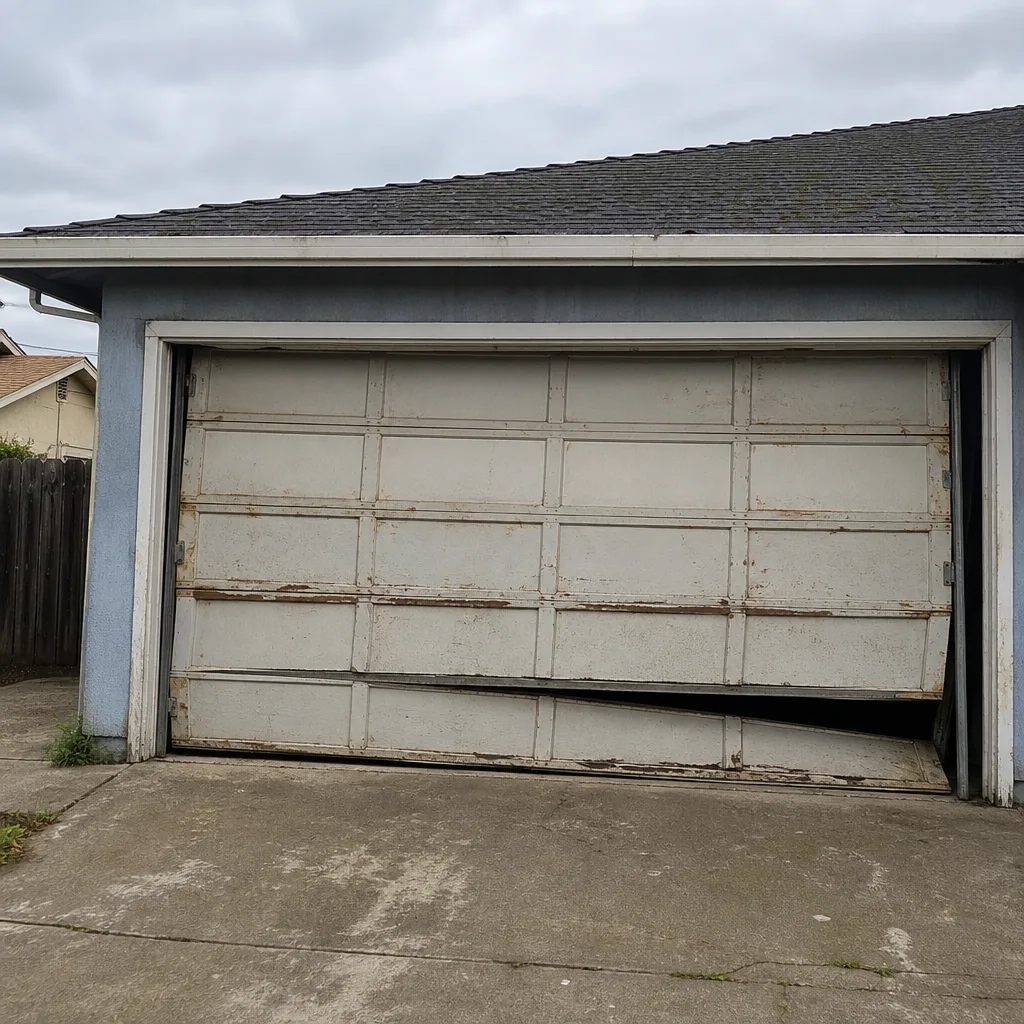 Before
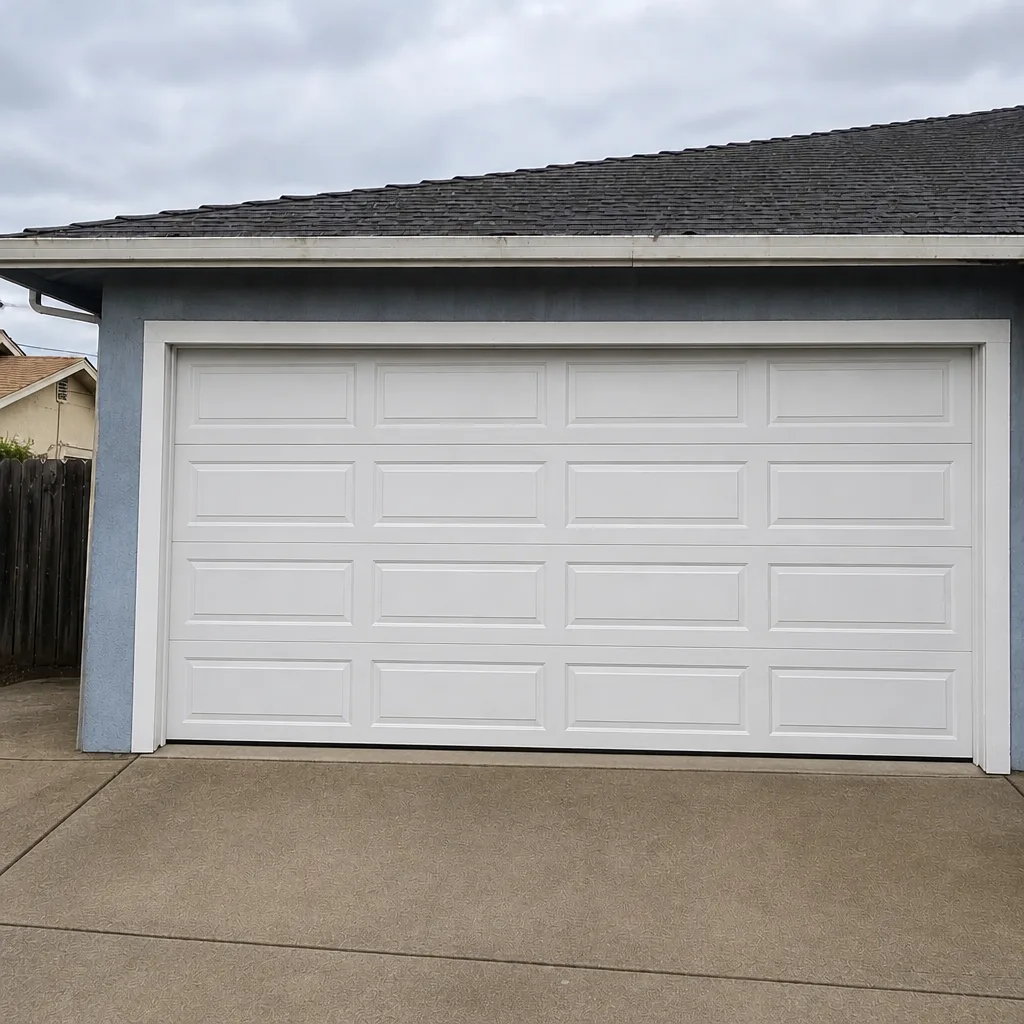 After
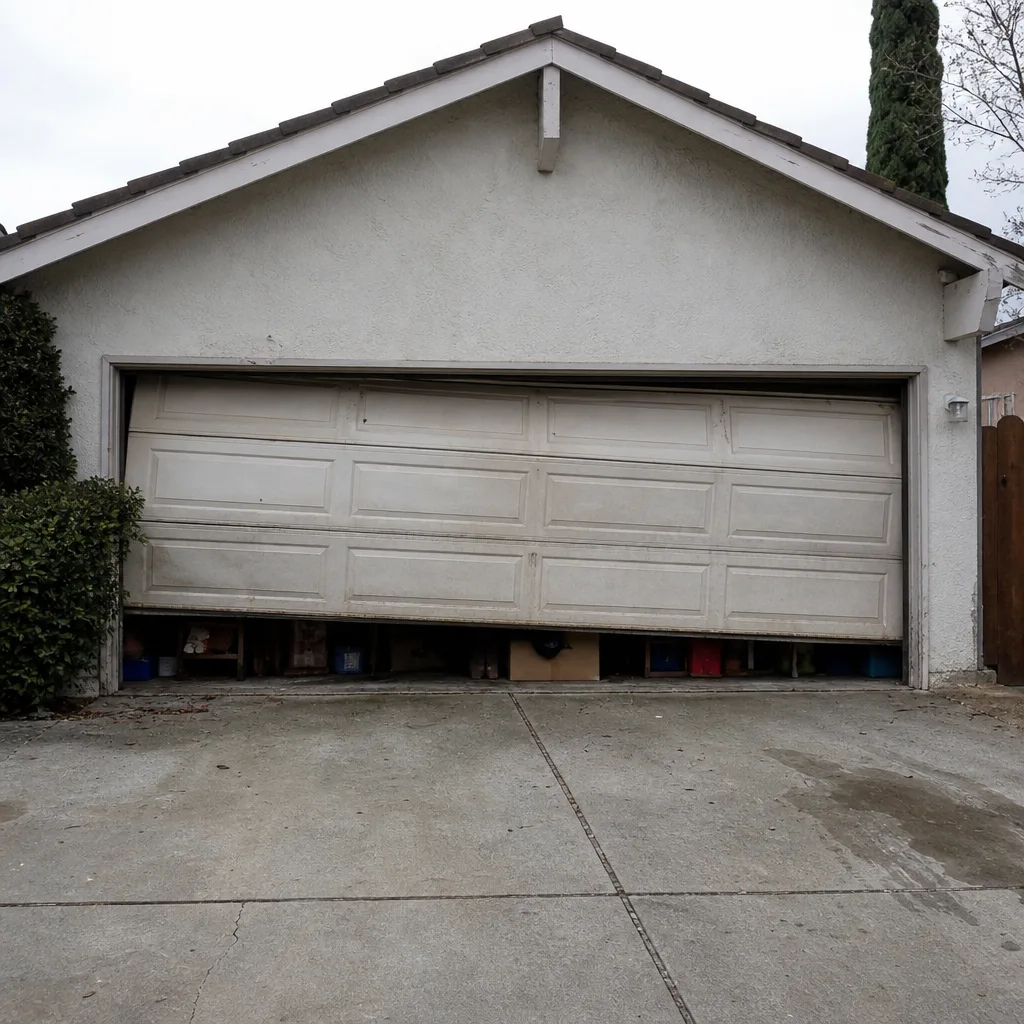 Before
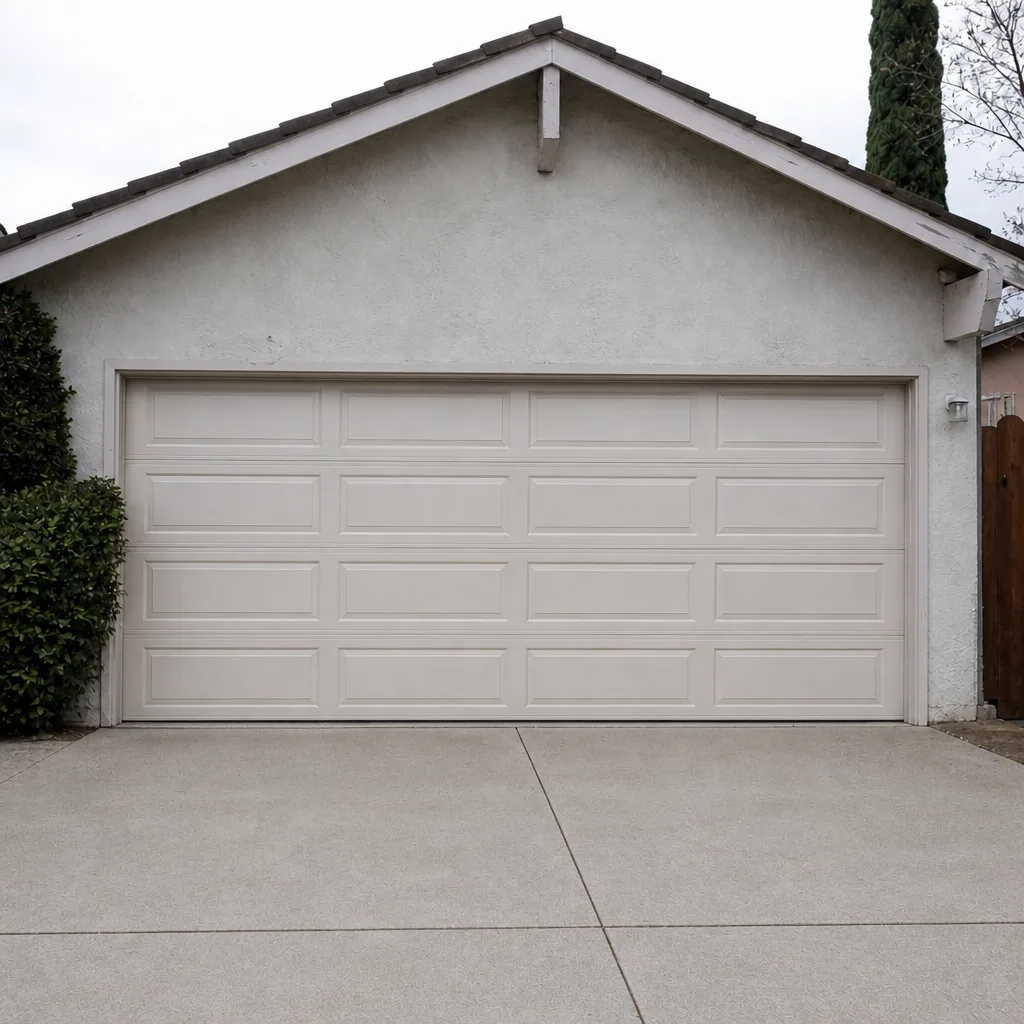 After
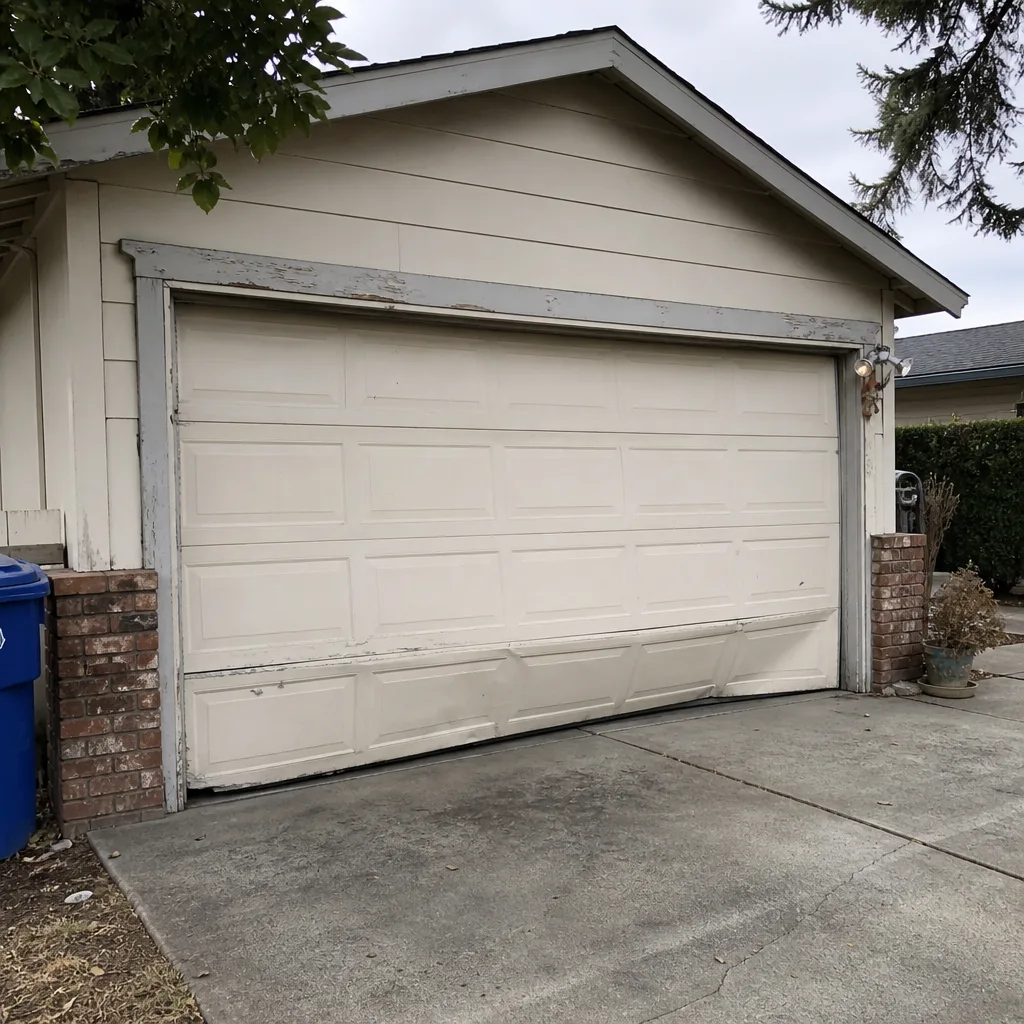 Before
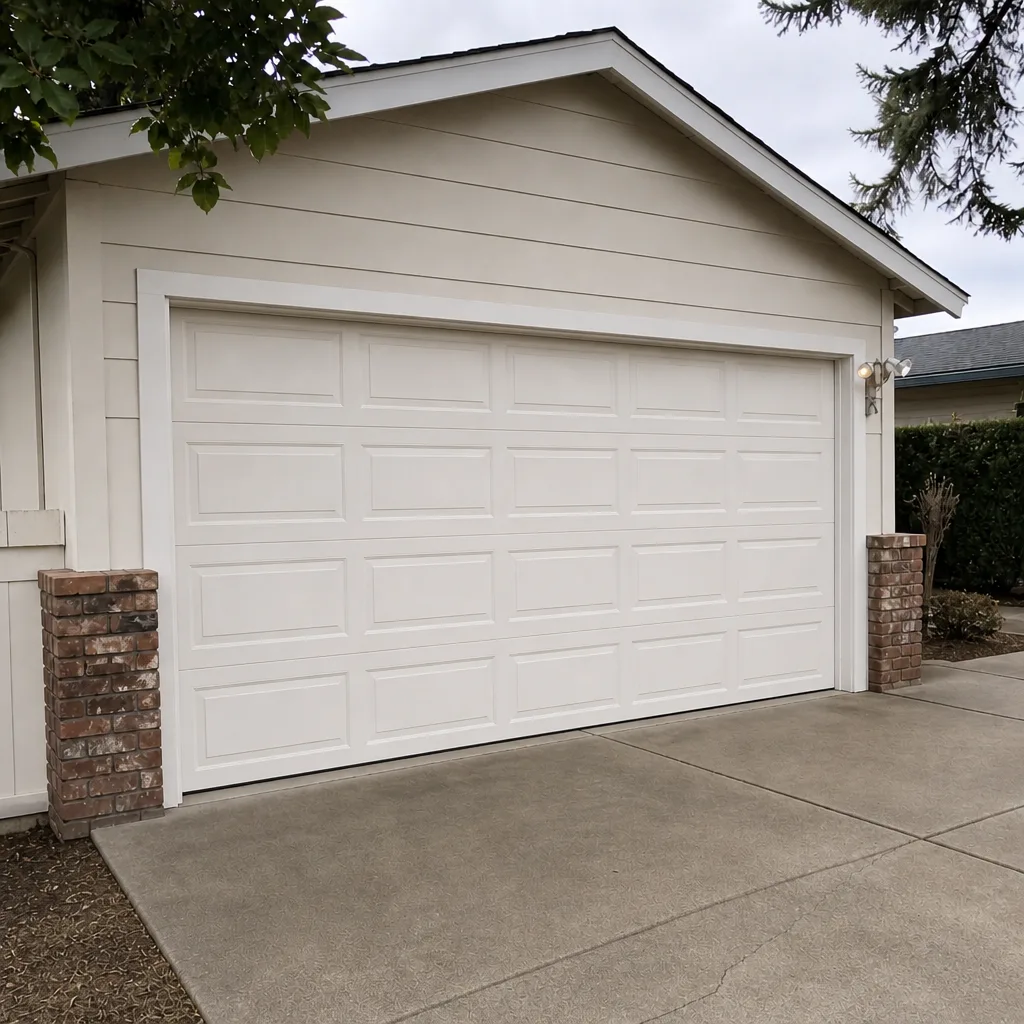 After
When to Call a Professional
There’s a category of garage door problems you shouldn’t wait on. A broken spring, a snapped cable, a door that’s come off its track and is hanging, or an opener that reverses on contact with something are all situations where waiting invites a bigger repair or a genuine safety risk. Electrical failure inside an opener, odd smells, or a door that closes partway and stops usually point to a component failure that will only get worse.
Some issues genuinely are cleanup work: noisy rollers, a remote that needs reprogramming, or a sensor knocked out of alignment by a broom handle. Those can wait for a scheduled visit. Anything involving springs, cables, or structural damage shouldn’t.
Marigold Garage Door Repair offers free estimates in Stockton – call (877) 405-9570. We answer 24/7. A call outside dispatch hours is booked into the next opening, Sunday through Friday, 7am to 7pm. If you need a second opinion on a quote you’ve already received, we’re happy to give one before anyone starts work.
Frequently Asked Questions
Spring replacement in Stockton is typically quoted per job, and the price for one spring is different from the price for a matched pair, which is usually replaced together. The written estimate sets the final price before any work starts. Because the quote depends on the spring size, the door’s weight, and whether cables and rollers need replacing at the same time, call (877) 405-9570 for a quote specific to your door.
Same-day service is often available for a broken door, but not guaranteed. We answer 24/7 and dispatch technicians fast from 7am to 7pm, Sunday through Friday. If a spring is broken, keep the door closed and don’t try to open it. Call (877) 405-9570 and we’ll book the next available window.
Yes, any contractor doing garage door work for compensation in California should be licensed and hold the appropriate classification. The most common for garage door work is the C-61 Limited Specialty, though some companies operate under a general building license. Verify their license and insurance on the CSLB website before booking.
It shouldn’t. A well-run company quotes from an on-site diagnosis, in writing, and that quote is the price. If a technician finds something the diagnosis missed, they should stop, explain, and get your approval before continuing. If a quote grows without that conversation, ask what was missed and why. Call (877) 405-9570 for a written estimate on any Stockton repair.
A genuine multi-brand specialist works on the brand you already own, not just the brands they prefer to install. If you have a Craftsman or a Raynor door, or a Chamberlain opener, ask directly whether the technician is familiar with that system. If a company can’t answer specifically, they’re probably a generalist or a sales-first operation. Our garage door opener repair page shows the brands we work with every week.
Treat any unsolicited door knock the same way you’d treat any cold call: take the card, thank them, and verify before booking. The same applies to a contractor who showed up uninvited and claims to have noticed a problem. If your spring really is broken, a legitimate company will still be there when you call them after you’ve checked the CSLB record. If they aren’t, that’s the answer.
The Bottom Line
Hiring a garage door contractor in Stockton comes down to doing the checking the state doesn’t do for you. Verify the license and insurance on the CSLB site. Ask the five interview questions and actually listen to the answers. Insist on an itemized written quote, and treat that quote as the price unless you approve a change. Watch for the local patterns – unsolicited knocks, springs quoted as a single price, and lifetime warranties from companies you can’t verify. Do those four things and the rest of the decision usually sorts itself out. If you want to talk through your specific door or opener before you decide, Marigold Garage Door Repair is here for Stockton homeowners. Marigold Garage Door Repair specializes in repair, opener repair, and installation – and we work on the brand you already own. Have a question about hiring anyone, even if it isn’t us? Call (877) 405-9570. We answer 24/7. Fast dispatch from 7am to 7pm, Sunday through Friday. Free estimates, and no pressure to replace what can still be repaired.
For homeowners outside the immediate Stockton area, we also serve the surrounding Central Valley communities. Visit our Stockton page for area details, or the main garage door services hub to see the three service lanes we focus on: repair, opener repair, and new installation. Whether your opener is a LiftMaster or a Craftsman, or your door is a Raynor or a Chamberlain, we diagnose the system you have before quoting anything – and we’ll tell you honestly when repair is the right call and when replacement actually makes sense.
Written by the team at Marigold Garage Door Repair.