
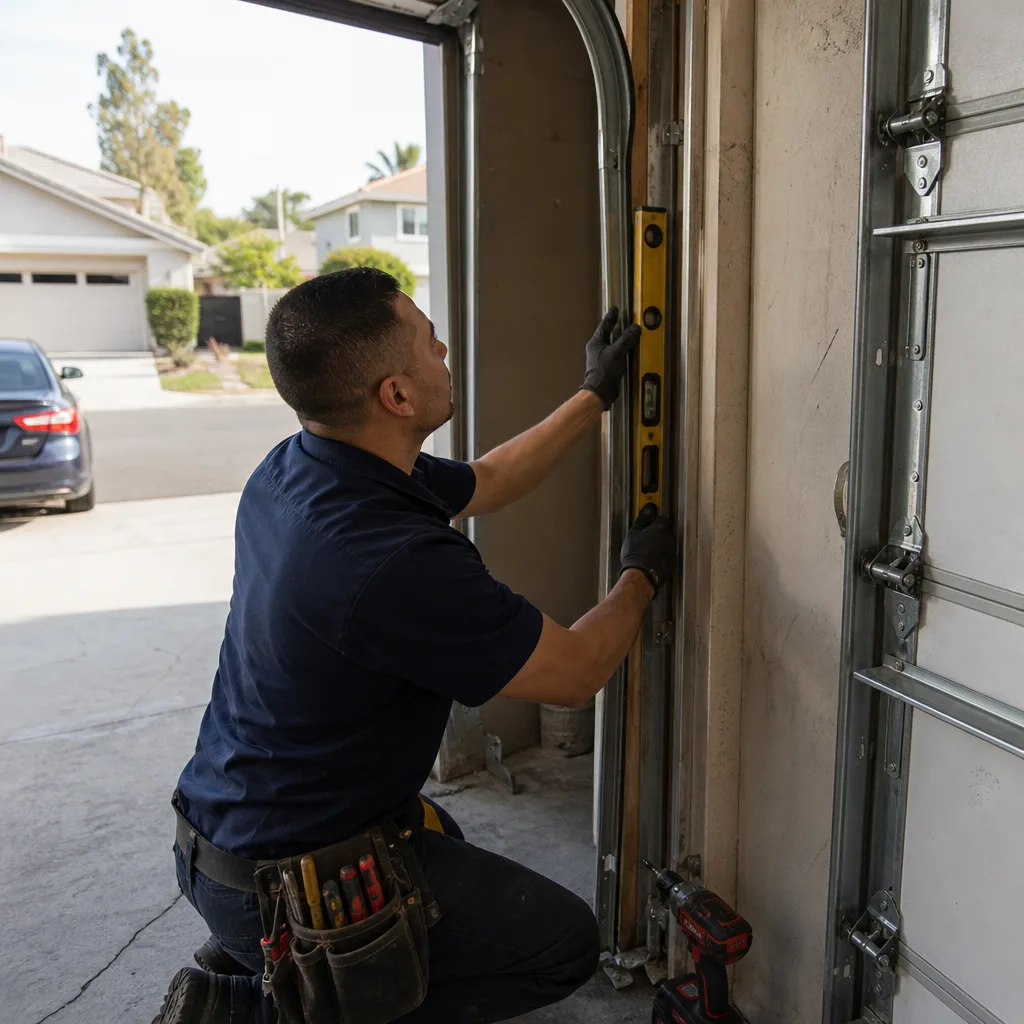
Last updated November 15, 2026
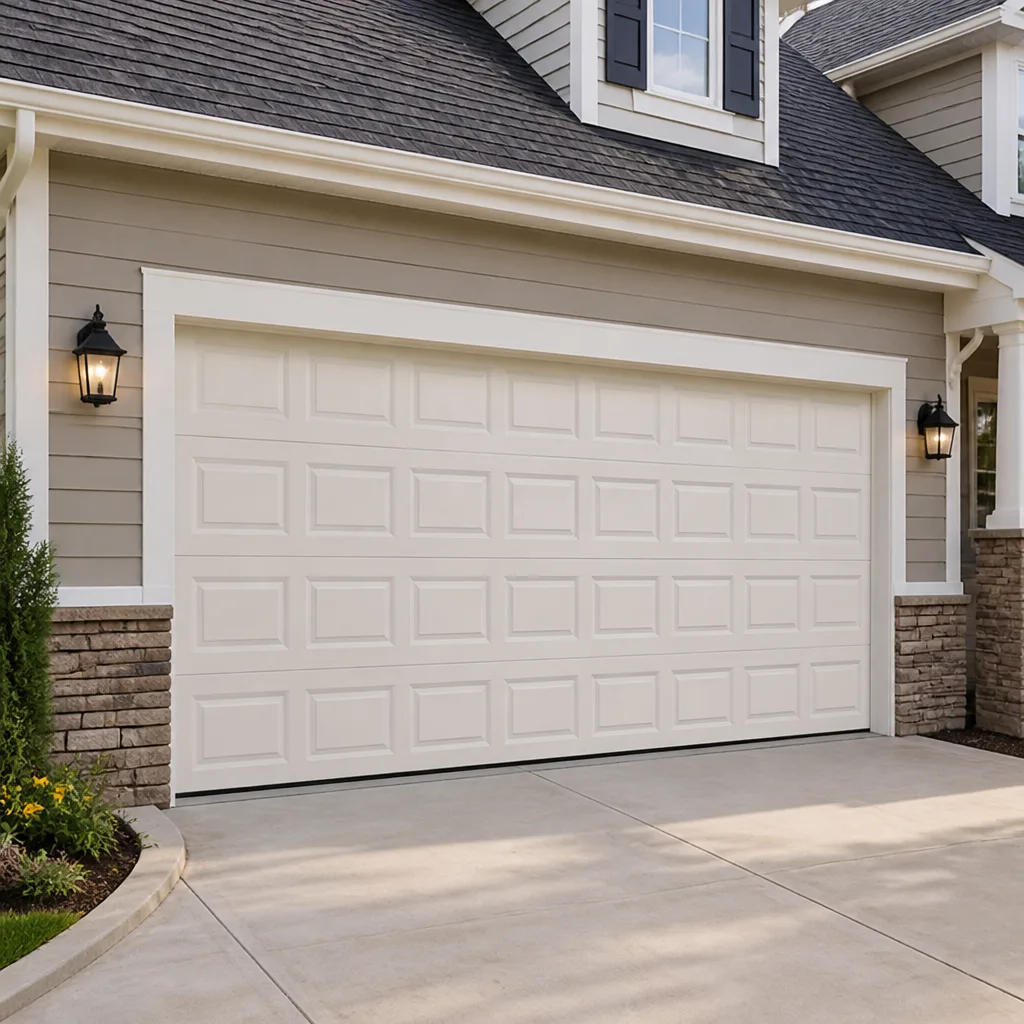 Raised-panel steel
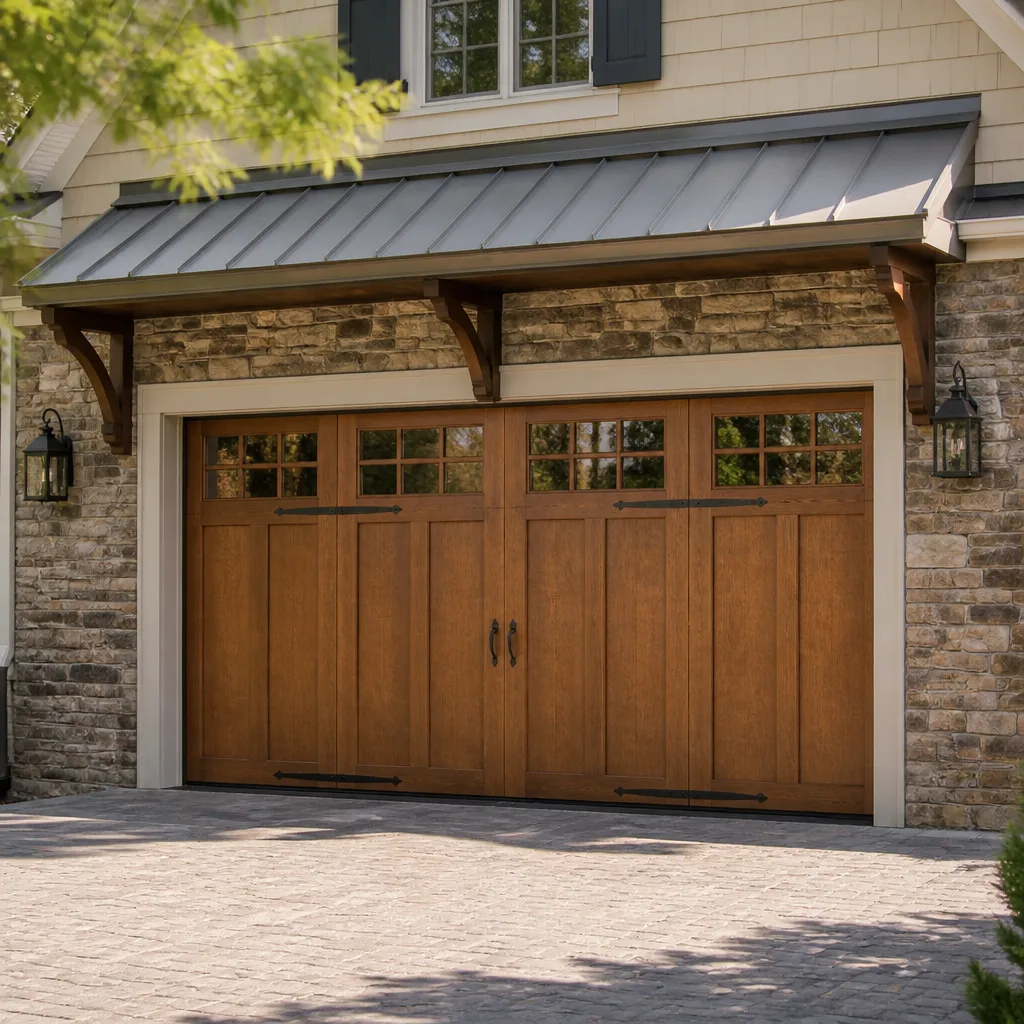 Carriage house
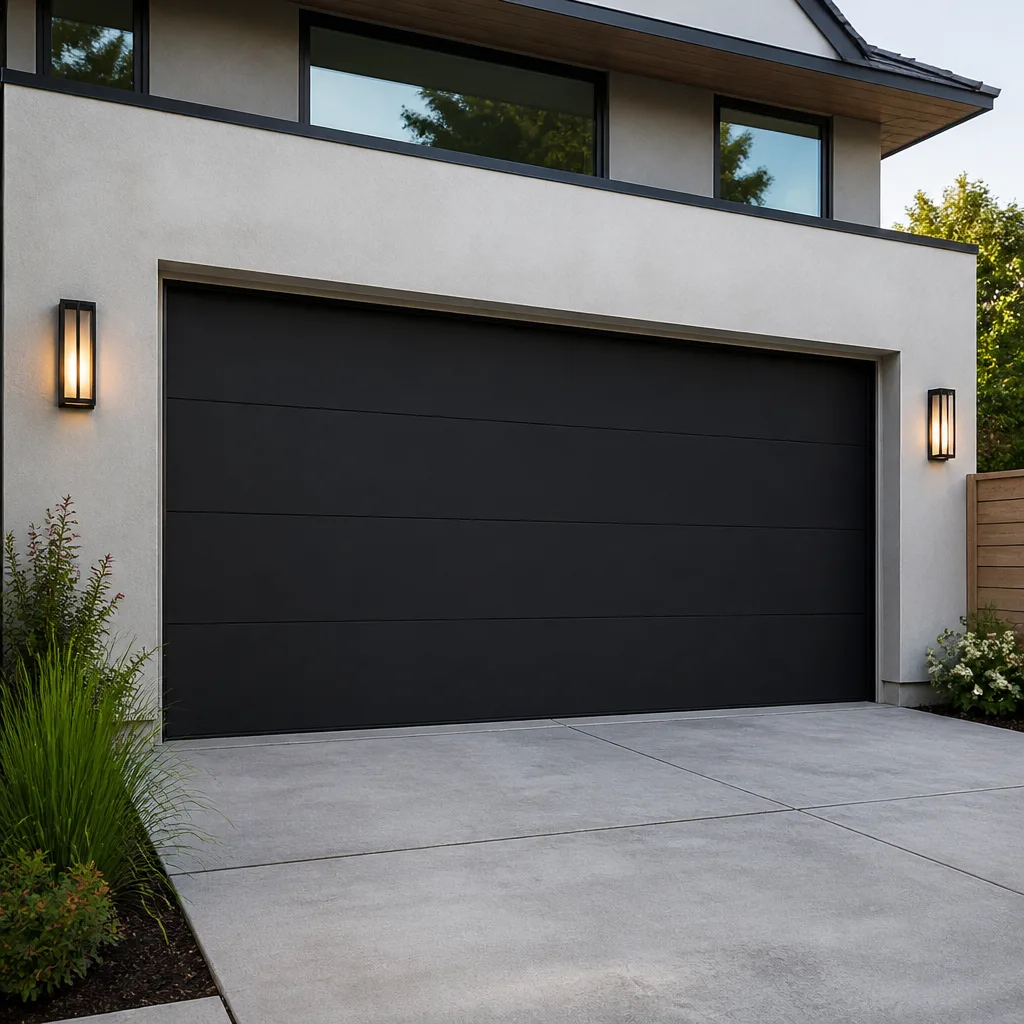 Modern flush
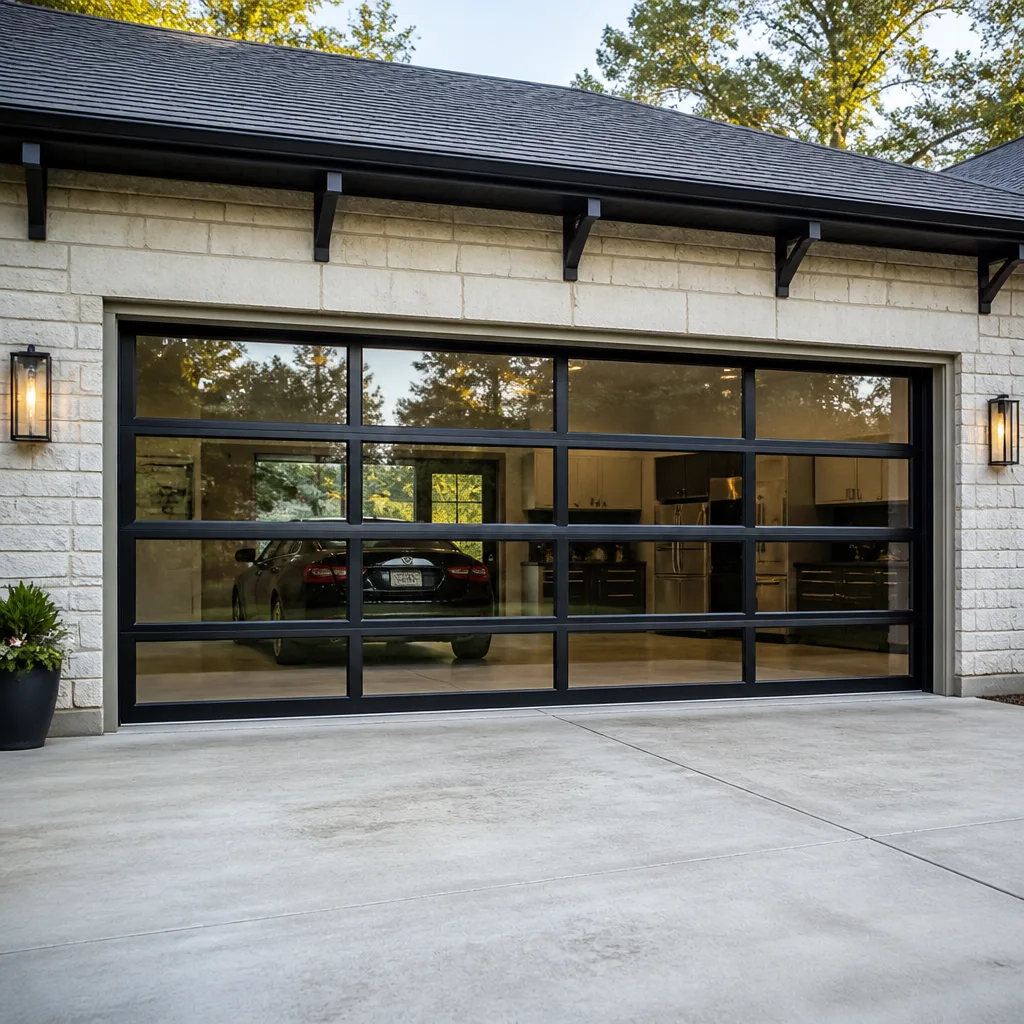 Full-view glass
 LiftMaster openers
 Chamberlain openers
Full 25-point door and opener safety check with every visit - springs, cables, rollers, tracks, and your LiftMaster or Chamberlain opener included
You get a price before we start. It does not change when the pro arrives.
Get your free estimateGarage Door Repair Troubleshooting in Stockton: Common Problems and How to Fix Them
A grinding noise at seven in the morning usually isn’t a broken spring. In our experience across Stockton, the same grinding sound is far more often a dry roller riding a steel track, or a hinge that has lost its grease after a long dry summer. The symptom and the cause rarely live in the same place. That’s the trap most homeowners fall into: they hear a noise, assume the worst, and either panic-call for a spring replacement or ignore it until something bigger fails. This guide teaches you to read the whole system – what you see, hear, and feel – before you decide what’s wrong. You’ll get a symptom-to-cause decision tree, the Stockton heat factors that drive specific failures, which fixes are safe to try yourself, and which ones you should never touch.
Quick Answer
Most garage door problems in Stockton trace back to one of five causes: worn rollers and hinges (noise), a misaligned safety sensor (door won’t close), a failing torsion spring (door won’t lift or lifts a few inches then stops), a frayed or jumped cable (door hangs crooked), or opener logic errors (flashing lights, unresponsive remotes). Start by matching your symptom to a cause, not by guessing at the part that looks broken. Safe fixes – lubrication, sensor alignment, remote reprogramming – you can do yourself. Springs, cables, and drums belong to a trained technician.
Styles & brands we work with
- Raised-panel steel
- Carriage house
- Modern flush
- Full-view glass
- LiftMaster openers
- Chamberlain openers
Table of Contents
- Start Here: The Symptom-to-Cause Decision Tree
- How Stockton Summers Wear Out Doors Faster
- The Bystander Part Problem: When the Broken Piece Isn’t the Cause
- What Each Noise Is Telling You
- Reading Your Opener: Chamberlain, LiftMaster, Genie, and Craftsman Codes
- Safe DIY Fixes vs. Leave-It-Alone Repairs
- Off-Track and Crooked Doors: What to Do First
- Repair or Replace? How to Decide
Start Here: The Symptom-to-Cause Decision Tree
Forget part names for a moment. Troubleshooting works best when you start from what the door is doing and work backward. Here’s how we walk a homeowner through it on the phone before a technician ever rolls out. This is the same logic that makes garage door repair in Stockton faster to diagnose when we arrive, because you’ve already done half the work.
Step 1: Does the opener motor run but the door doesn’t move? If you hear the motor but the door stays put, the problem is almost always a broken spring, a snapped cable, or a stripped drive gear in the opener. The opener is trying to lift a door that has lost its counterbalance. Stop and call – don’t run the opener repeatedly.
Step 2: Does the door move a few inches and then reverse or stop? This points to a binding track, a worn roller, or a force-setting problem on the opener. Look at the tracks for anything obviously bent and check that the sensors at the bottom corners are lit.
Step 3: Does the door close partway and then go back up? That’s a safety sensor issue the vast majority of the time. The photo-eye sensors near the floor are misaligned, dusty, or blocked by something leaning against the door frame.
Step 4: Is the door loud but functional? Noise without failure means wear, not breakage. Dry rollers, loose hinges, and a lack of lubrication on the hinges and torsion bar bearings are the usual suspects.
Step 5: Is the door uneven – one side higher than the other? A crooked door usually means a cable has jumped its drum or frayed near the drum. Don’t force it. This one needs a technician.
Work down the list until one answer fits. In most Stockton homes, the first question resolves it in under a minute.
How Stockton Summers Wear Out Doors Faster
Stockton’s summers push past 100°F regularly, and that heat does things to a garage door that cooler-climate troubleshooting guides never mention. If you moved here from the Bay Area or the coast, the failure pattern on your door will look different than what you’re used to. Here’s what actually happens to a door after a long Stockton summer.
- Weatherstripping goes brittle. The rubber or vinyl seal along the bottom and sides of the door dries out and cracks. Once it cracks, hot air and dust get past it, and the seal starts to crumble onto the driveway. A brittle seal also sticks to the floor and can cause the door to reverse on close.
- Cables fray near the drums. Heat stresses the steel cable where it winds around the drum at the top corners of the door. A cable that looks fine in April can show broken strands by August. Fraying there is a warning sign, not a cosmetic issue.
- Lubricant evaporates. The grease on your rollers, hinges, and torsion bar bearings cooks off faster in Stockton than in milder climates. That’s why the same roller that would last a decade elsewhere can start squealing here in two or three summers.
- Wood and steel expand and contract. The daily swing from a hot afternoon to a cool Delta evening works on fasteners and panel joints. Screws loosen, panels shift, and the door gets a little noisier each season.
None of this means a Stockton door is doomed. It means the maintenance rhythm is different. A door that gets lubrication and a visual check before summer holds up far better than one that gets attention only when something breaks. If your door is showing the signs above and you’re on the fence about a visit, a free estimate from a garage door specialist is cheaper than a mid-summer breakdown.
The Bystander Part Problem: When the Broken Piece Isn’t the Cause
This is the troubleshooting mistake we see more than any other. A homeowner looks at the door, spots the part that looks bent, worn, or broken, and assumes that’s the problem. Often it’s a bystander – a part that failed because something upstream of it wore out first. Fix the visible part and the new one fails too, because the real cause is still there.
The most common examples in Stockton homes:
- A bent track caused by a worn roller. The roller comes out of alignment, the door rides against the track instead of through it, and the track bends. Replace the track without replacing the roller and you’ll be back where you started within a season.
- A stripped opener gear caused by a door that’s out of balance. The opener isn’t designed to lift the door’s full weight; the springs do that. When a spring weakens, the opener works harder, the gear wears, and eventually it strips. A new gear on a door with a weak spring just strips again.
- A frayed cable caused by a dry torsion bearing. The bearing seizes, the torsion bar drags, and the cable takes the strain. Replace the cable and ignore the bearing and the new cable frays too.
- A door that reverses on close because the weatherstripping is dragging. The sensor isn’t broken. The seal is. Aligning the sensor does nothing because nothing was wrong with it.
This is where a trained eye pays for itself. A technician traces the failure back to the upstream part before quoting a repair. That’s the difference between a fix that lasts and a fix that gets you through the month. Our technicians have up to 12 years of experience reading that chain, and we do it with the door you already own – whether it’s a LiftMaster opener, a Chamberlain, or an older Raynor unit.
What Each Noise Is Telling You
Sound is the most useful diagnostic tool a homeowner has. You don’t need to know the part; you just need to describe the sound accurately. Here’s how we translate what you hear into what’s likely wrong.
- A grinding or scraping noise. Usually a dry roller or a roller that has lost its bearing, sometimes a hinge that’s rusted or dry. This is the most common and least alarming sound if the door still moves freely.
- A squealing or high-pitched squeak. Almost always lack of lubrication on the torsion bar bearings or the hinges. It’s the easiest sound to fix. Check the torsion bar – it’s the horizontal bar above the door – but don’t touch it; just listen to where the squeak is coming from.
- A popping or snapping sound, often one loud pop. A snapped torsion spring. If you heard one pop and the door won’t lift, that’s the diagnosis. This is not something to test further. Stop using the door and call a technician.
- A rattling or banging noise. Loose fasteners, a hinge whose screws have backed out, or a panel that’s working loose. Usually fixable with a screwdriver and a check of the hardware.
- A humming opener that doesn’t move the door. The opener motor runs but the door stays put – broken spring, snapped cable, or a stripped drive gear. Any of these three is a technician call.
- A rhythmic clunk as the door goes up and down. A worn roller or a cable that’s jumping its drum slightly with each revolution. Worth a visual check before you call.
Note the sound you hear, then run it through the decision tree above. In Stockton, the grinding and squealing that top this list are disproportionately common because the heat strips lubrication. It’s the same physics that makes the interior of a parked car so hot in July – the metal simply loses its protective film faster than it would elsewhere.
Reading Your Opener: Chamberlain, LiftMaster, Genie, and Craftsman Codes
Openers talk to you, but each brand talks a little differently. One of the fastest ways to waste an afternoon is to google “my opener is blinking and won’t close” and land on advice for a brand you don’t own. Here’s the general lay of the land for the brands we service most in Stockton.
Chamberlain and LiftMaster. These two share a lot of engineering, so their indicators look similar. They tend to use LED codes and patterned light sequences on the motor head rather than a simple blink count. A small number of flashes or a repeating pattern usually corresponds to a safety sensor or a limit/force issue. The wall control or a smart-home app can sometimes show a plain-text fault on newer models, which is easier than counting lights.
Genie. Genie openers are famous for their blink codes – a sequence of short and long flashes on the motor housing that map to specific faults. Counting them accurately matters. If you miscount, you’ll be reading the wrong code. Write the pattern down as you watch it and compare it to your model’s manual.
Craftsman. Craftsman openers (often made by the same manufacturer as Chamberlain units) use similar light indicators. Many Craftsman remotes and wall consoles from the same era can be finicky about reprogramming, so if your remote stopped responding, check the battery and re-pair before assuming the opener failed.
The universal rule: find your exact model number on the motor head or the back of the opener unit, then match the blinking or lighting pattern to that specific model’s manual or to garage door opener repair guidance. Generic advice is how people end up replacing a good opener. If the code points to something you can’t resolve with a battery change or a sensor check, that’s when a technician saves you money, because we test the electronics and the door together – the mechanical and the electronic sides of the same system.
Safe DIY Fixes vs. Leave-It-Alone Repairs
We’d rather you fix the small things yourself and call us for the big ones. Knowing which is which keeps you safe and saves you money. Here’s the honest split.
Safe to handle yourself:
- Lubrication. A proper garage door lubricant on the hinges, rollers, and the torsion bar bearings (the bar itself, not the spring) quiets most doors and slows wear. Do it in early summer before the heat peaks.
- Safety sensor alignment. The small photo-eye sensors near the bottom of the door on each side must face each other and both be lit. Wipe them clean and nudge them until both light up. Nine times out of ten, that fixes “the door won’t close.”
- Remote reprogramming. Replacing the battery and re-pairing a remote is a homeowner-level task. Every brand has a specific pairing sequence, so use your model’s manual.
- Visual checks. Look for fraying at the cables near the top corners, cracking in the weatherstripping, and anything leaning against the safety sensors.
Leave alone, regardless of your skill level:
- Torsion springs. These are under extreme tension and hold the entire weight of the door. A frame of reference: an untrained person adjusting a torsion spring is one of the most common ways people get seriously hurt working on a garage door. There’s no safe DIY version of this job.
- Cable drums and cables. Same story. A snapped or slipping cable can cause injury in an instant. Replacing cables is not a homeowner repair.
- Track realignment on a door that’s under spring tension. Nudging a slightly bent track can turn into a door that comes off its tracks. If the track is visibly bent, call.
When a repair crosses into the second list, call (877) 405-9570. We answer 24/7. Fast dispatch from 7am to 7pm, Sunday through Friday. The price is quoted and agreed before any work begins, so there’s no surprise on the invoice.
Off-Track and Crooked Doors: What to Do First
An off-track door looks alarming, and it can be dangerous. Here’s what to do, in order, before you call.
- Stop operating the opener. Every cycle you run makes the misalignment worse and can damage the panels or the tracks. Pull the manual release only if you need to disengage the door from the opener, and do that carefully.
- Don’t try to force the door back onto the track. A door that’s jumped its track is under tension from the springs. Forcing it can bring it down on you.
- Check for a visible cause. A roller that’s come out of its bracket, a bent track, or a cable that’s slack on one side are all signs of why the door left the track. Note what you see.
- Call a technician. Off-track doors need the tension released safely before the door can be realigned or re-secured. This is a job for someone with the right tools and training.
In Stockton, off-track doors often show up after a season of ignored noise or a door that’s been binding for months. The binding was the warning; the off-track was the result. If you catch it early with lubrication and a track check, you usually avoid the off-track visit entirely.
Repair or Replace? How to Decide
The right answer depends on the door’s condition, not its age. Here’s how we think about it with a homeowner.
Lean toward repair if the door’s panels are solid, the tracks are straight, and the problem is limited to springs, rollers, cables, or the opener. Those are wear parts – replacing them is normal maintenance, and a good door can keep going for a long time with fresh wear parts. This is the “repair first” approach we take: we exhaust the fix before recommending a new door.
Consider replacement if the panels are rusted through, the door has sustained impact or structural damage, the frame is deteriorating, or you’ve had multiple repairs in a short window on a door that’s clearly at the end of its life. A door that’s noisy and worn but structurally sound is usually still a repair candidate. A door with bent panels, a failing frame, or repeated failure at multiple points is where replacement starts to make sense.
If you’re weighing the two, the fair question to ask is whether the door’s cost of ownership over the next few years is lower with repair or with replacement. That’s a conversation, not a sales pitch, and it should be based on your door and your budget – not on what a company happens to have in stock. If you decide to replace, that’s a Marigold Garage Door Repair service too, on brands we know well, including Clopay and Amarr.
Common Mistakes to Avoid
- Running the opener on a door that’s clearly stuck. A door that won’t lift, or has lost its tension, is in a failure state. Repeatedly running the opener strips the drive gear and can snap a spring that was only cracked. Stop and call.
- Buying a new opener when the door is the problem. A weak spring or a binding track makes a good opener work harder. Replacing the opener without fixing the door just wears out the new unit. Diagnose the door first.
- Ignoring a bent track that was caused by a worn roller. The track is often the bystander. Fix the roller first, then the track, or you’ll be back at it within a season.
- Using WD-40 instead of garage door lubricant. A general-purpose lubricant attracts dust and dries out quickly in Stockton heat. A proper door lubricant lasts, especially through the summer.
- Wrenching on the torsion springs because YouTube made it look easy. This is the one mistake on this list that can send you to the hospital. Springs, cables, and drums are technician work at any skill level.
- Assuming a blinking light means a dead opener. A blinking light is a message. Find the code for your exact model before you decide the unit needs replacing.
- Letting the weatherstripping crack and dragging on the floor. A brittle seal sticks to the driveway, causes the door to reverse on close, and lets heat and dust in. Replace it before summer.
See the difference
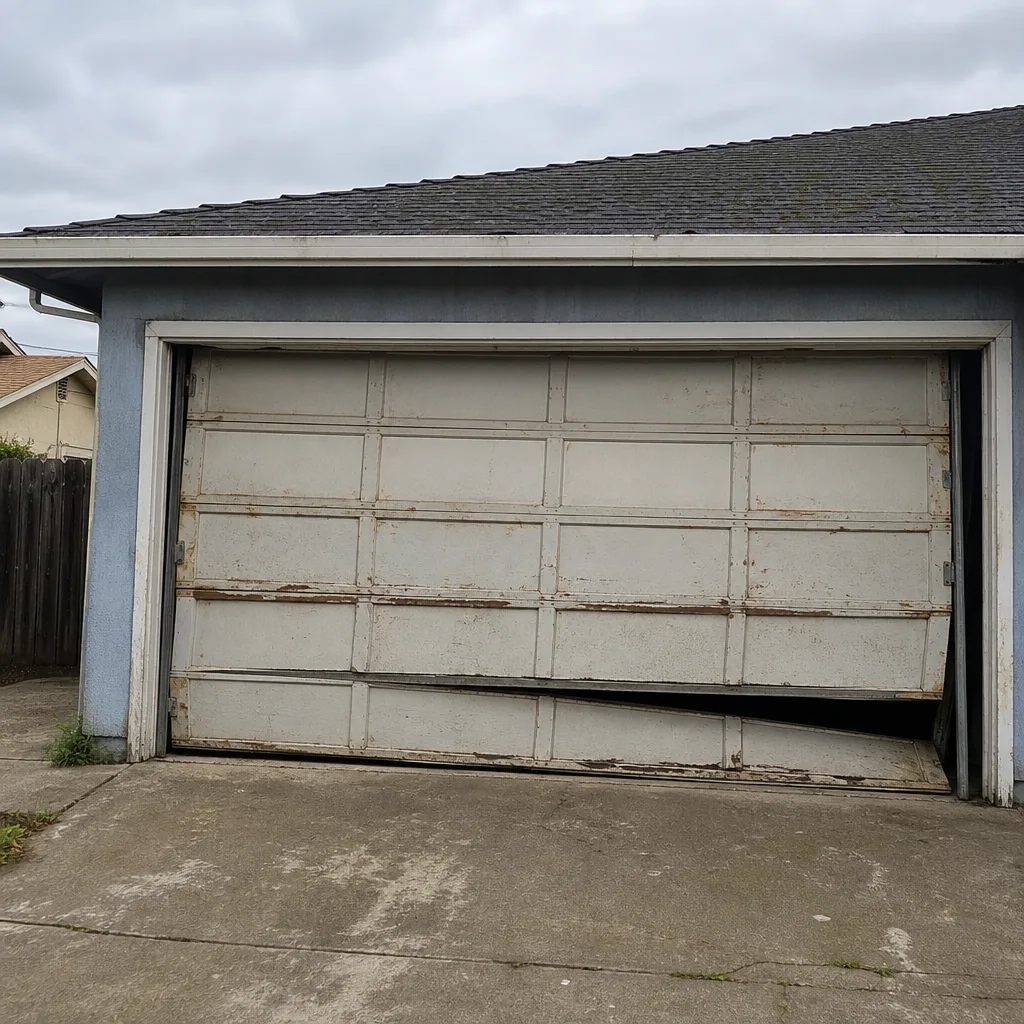 Before
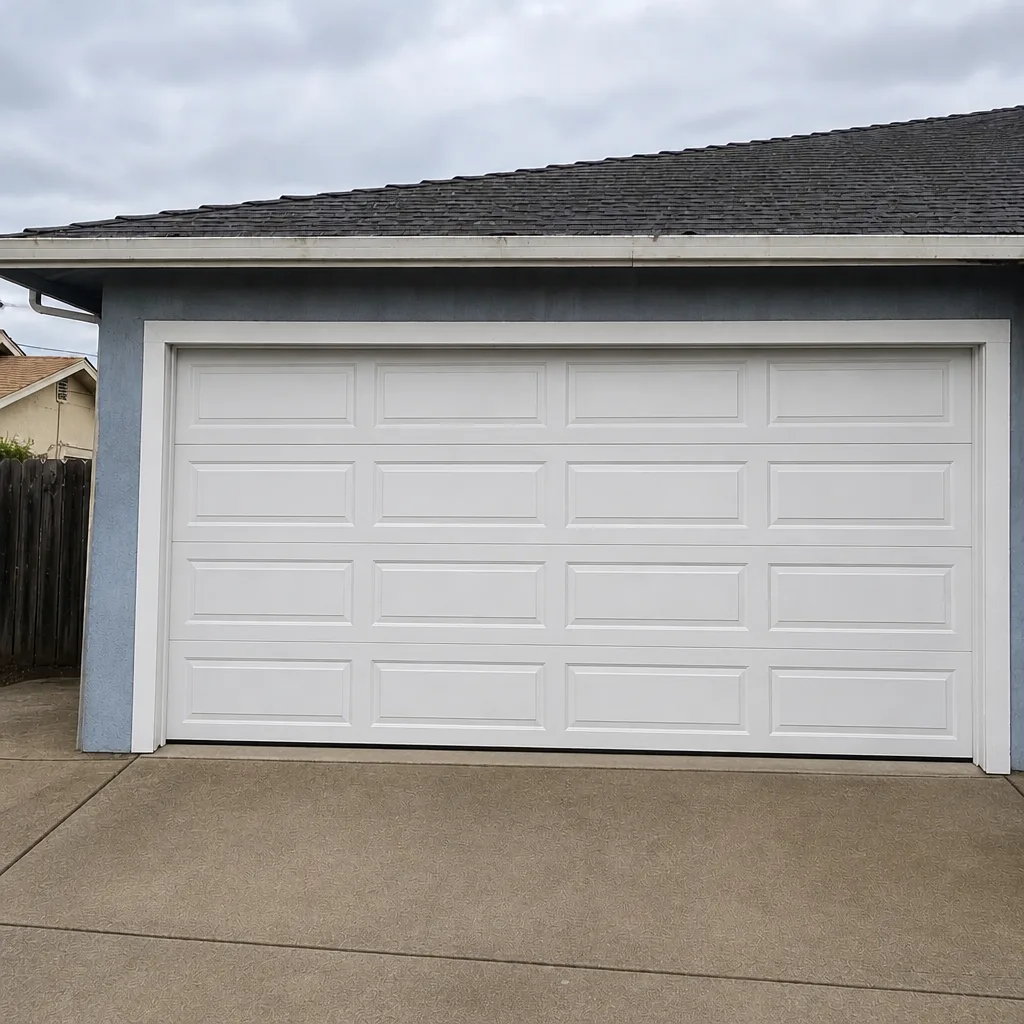 After
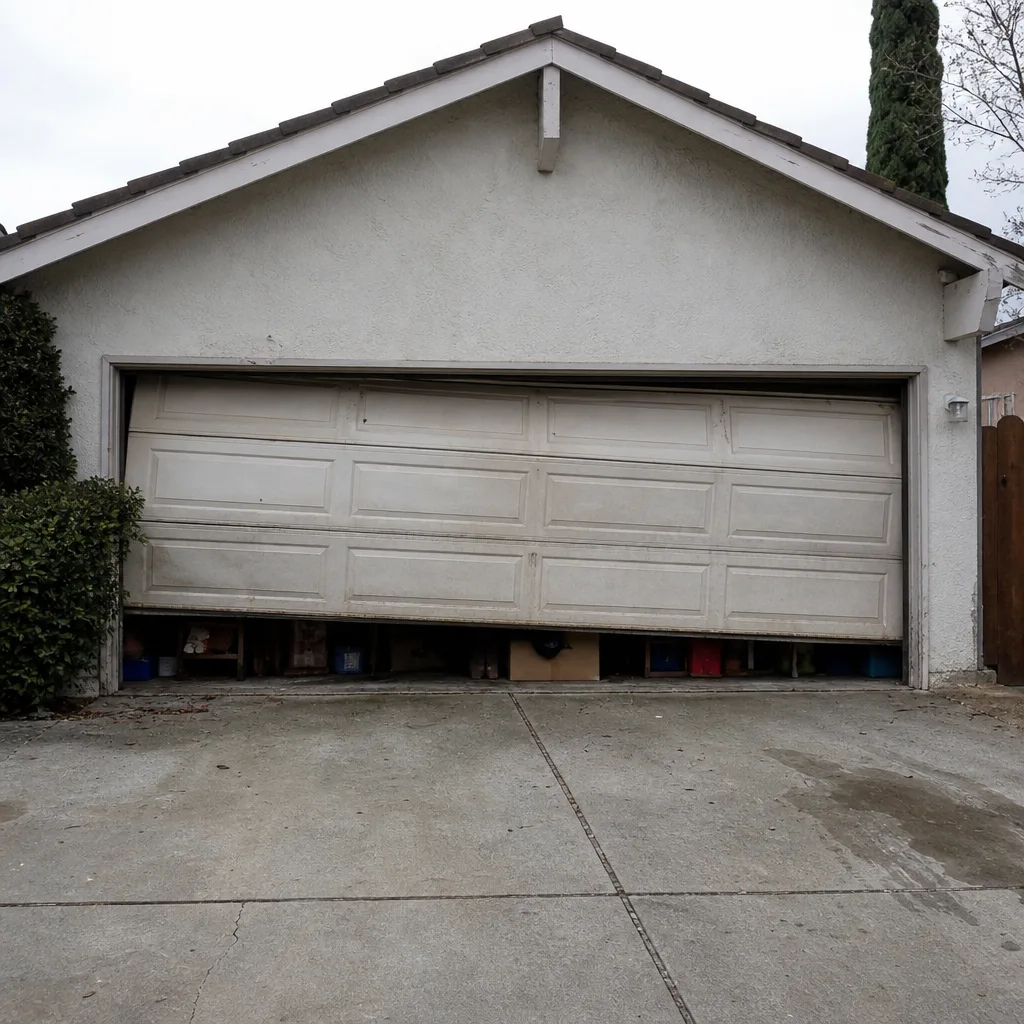 Before
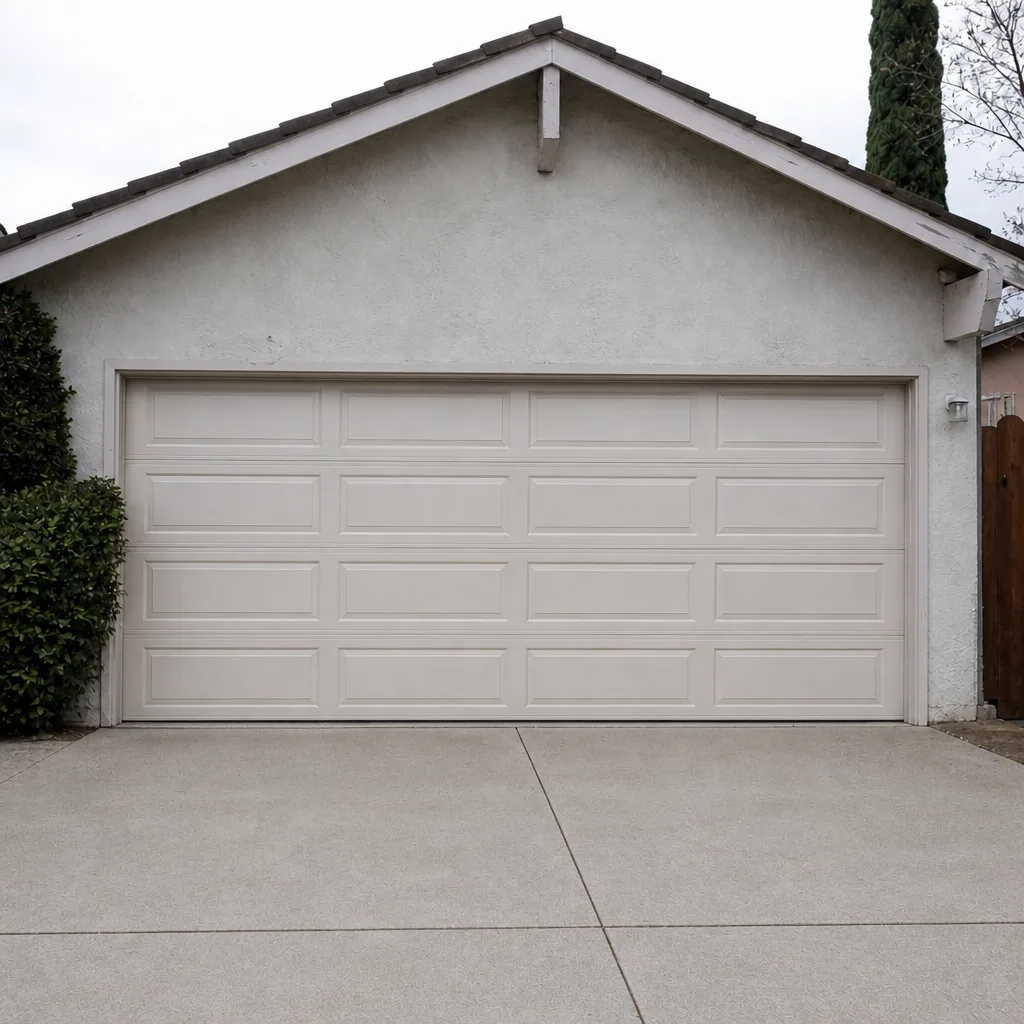 After
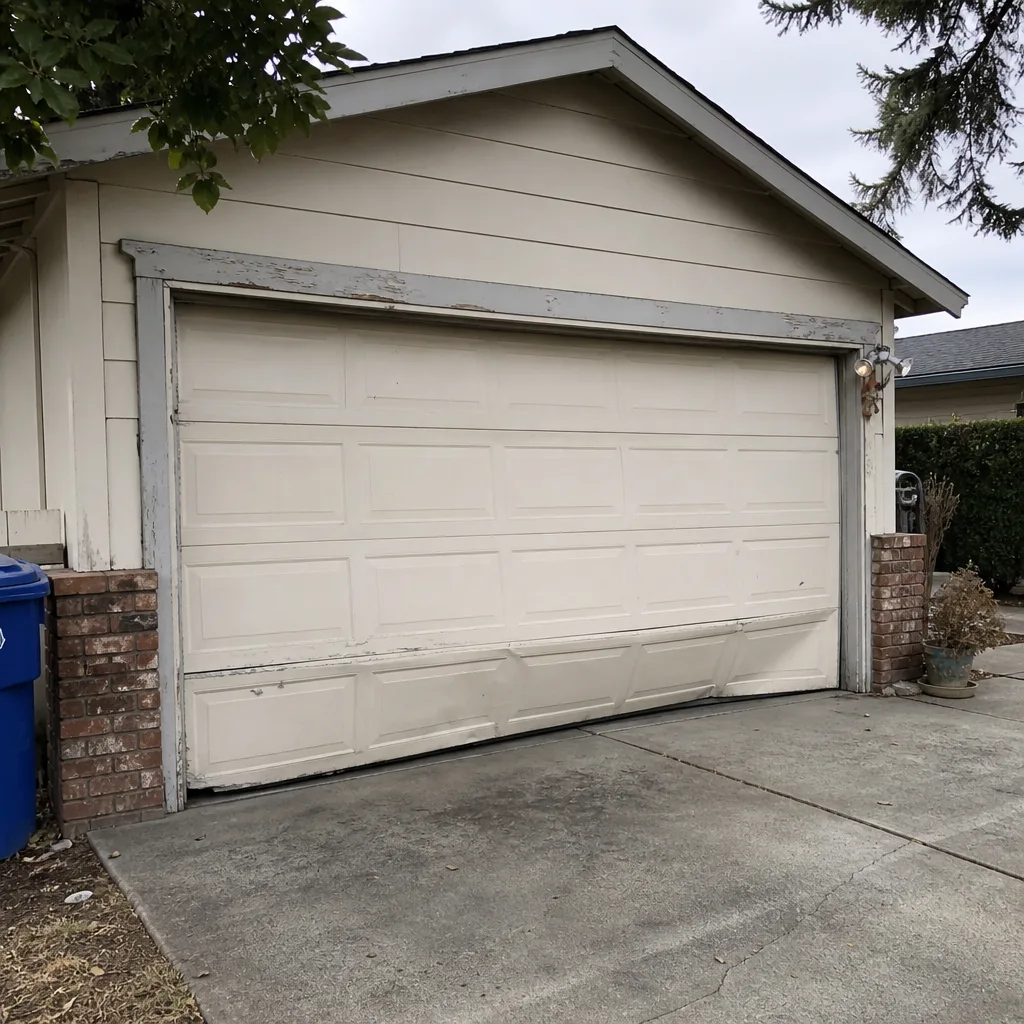 Before
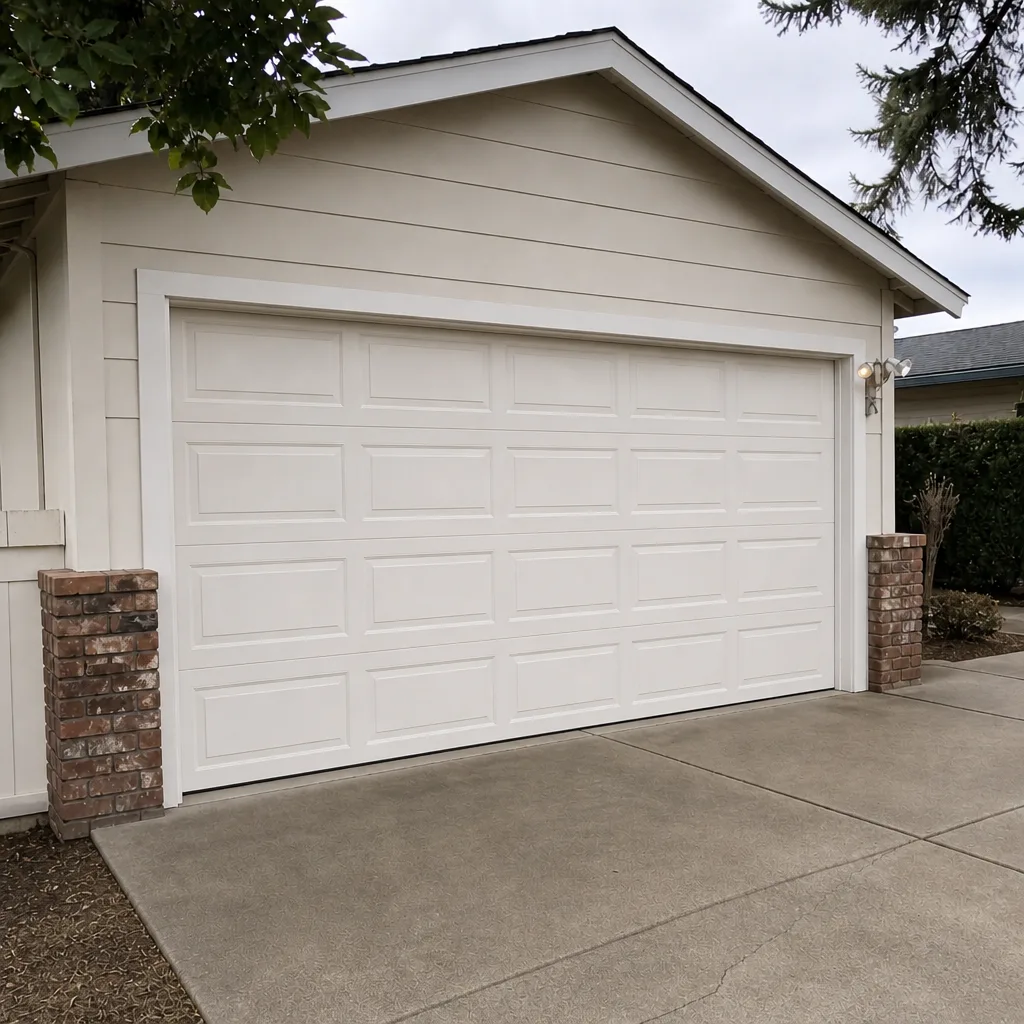 After
When to Call a Professional
Call a technician the moment your troubleshooting points to a spring, a cable, an off-track door, or a stripped opener gear. Those are the cases where a knowledgeable pro saves you from injury and from a fix that fails in a month. Also call if the door has stopped reversing properly, if you’ve seen cable fraying at the top corners, or if a repair you tried didn’t hold. For anything uncertain, a free estimate costs you nothing and gets you a clear answer. Marigold Garage Door Repair offers free estimates in Stockton – call (877) 405-9570. We answer 24/7. Fast dispatch from 7am to 7pm, Sunday through Friday. The price is quoted and agreed before any work starts.
Frequently Asked Questions
A grinding noise usually means dry or worn rollers or hinges, and it’s worth fixing before it turns into a bigger repair. Left alone, the wear accelerates and eventually the roller fails or the track bends. A little lubrication in early summer handles most of it. If the noise persists after lubrication, that’s a sign the roller or hinge is worn, and it should be looked at – call (877) 405-9570 for a free estimate.
Summer heat dries out lubricant, cracks weatherstripping, and stresses cables near the drums, so the door wears faster in July and August than in cooler months. The failure pattern is the same each year: noise first, then a door that binds, then a part that breaks. Keeping the rollers, hinges, and torsion bar bearings lubricated before the heat arrives is the single best way to slow the cycle.
No. A torsion spring is under extreme tension and holds the full weight of the door, so adjusting or replacing it is a job for a trained technician at any skill level. There’s no safe DIY version. Call (877) 405-9570 and a technician will assess it – the price is quoted and agreed before any work begins.
A flashing light on a Chamberlain or LiftMaster opener is usually a safety sensor issue or a limit/force fault, not a dead opener. Check that both photo-eye sensors at the bottom corners are clean and aligned – both should be lit. If the light pattern persists after that, note the exact sequence and compare it to your model’s manual. Call (877) 405-9570 if it doesn’t resolve.
Cost depends on the repair – a roller or hinge replacement is at the low end, while a broken spring, cable, or opener gear repair costs more. Every job is quoted and agreed before any work starts, and the written estimate sets the final price, so the number you agree to is the number you pay. Call (877) 405-9570 for an exact free estimate.
Same-day service is available for many repairs, so it’s worth calling right away. We answer 24/7, with fast dispatch from 7am to 7pm, Sunday through Friday. A call outside dispatch hours is booked into the next opening. Call (877) 405-9570 and we’ll get a technician to you as soon as possible.
The Bottom Line
Troubleshooting a garage door works best when you read the whole system, not just the part that’s making noise. Match your symptom to a cause using the decision tree, respect Stockton’s heat as an accelerator of wear, and remember that the part that looks broken is often the bystander – the cause is upstream. Lubrication, sensor alignment, and remote reprogramming are safe to do yourself. Springs, cables, drums, and off-track doors belong to a trained technician. When you reach a repair that needs one, our technicians have up to 12 years of experience on the brands you already own, and we’ll repair first before recommending replacement.
Marigold Garage Door Repair handles the full system – the door and the opener together – so you don’t need a second company to finish the job. For a free estimate in Stockton, call (877) 405-9570. We answer 24/7. Fast dispatch from 7am to 7pm, Sunday through Friday.
Written by the team at Marigold Garage Door Repair.